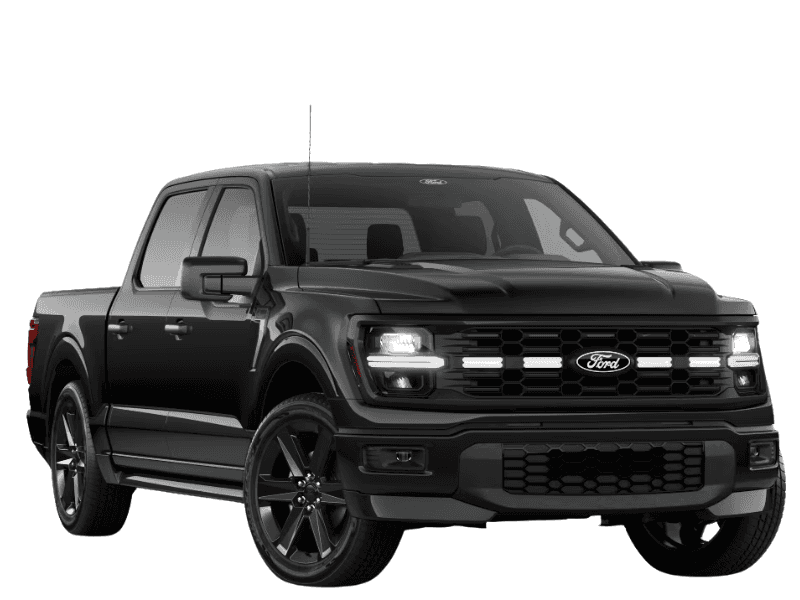
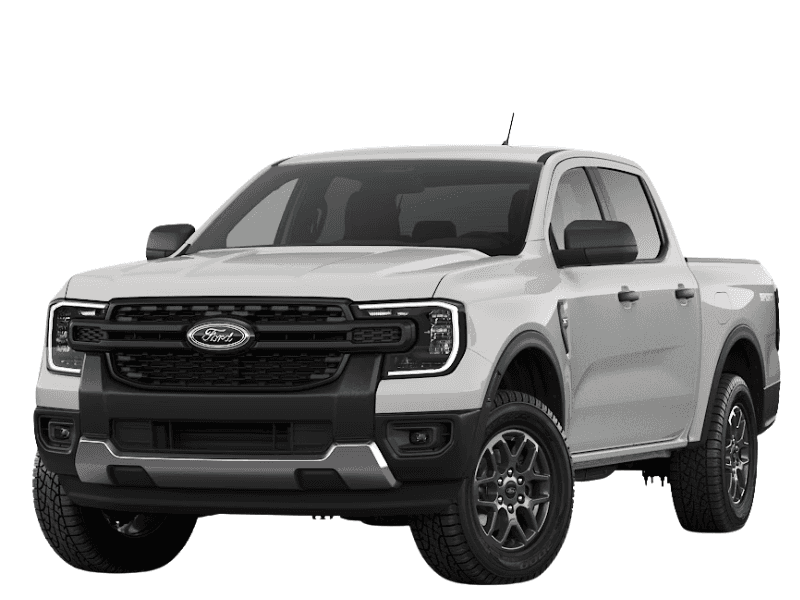
Two great half-ton trucks go head to head today in today’s match-up, the Ford F-150 and Toyota Tundra! These two well-known trucks have some important similarities and some differences. Read through the comparison chart below for some key points on both vehicles. Explore new F-150s available at Vern Eide Ford in Mitchell and current special offers.
Basic Warranty
Engine
Transmission
Torque
Drive Type
Seating
Fuel Tank Capacity
MPG City/Highway/Combined
Front Leg Room
Back Leg Room
Towing Capacity
NHTSA Average Safety Rating
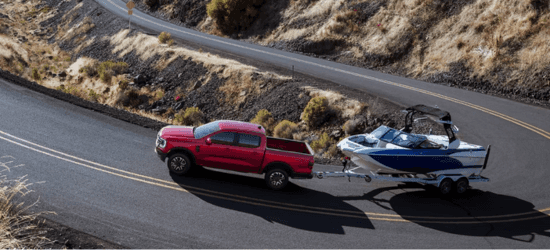
If your priority in the F-150 vs Ranger decision is maximum towing capacity, the F-150 pulls ahead by a wide margin, with up to 13,500 lbs compared to the Ranger’s 7,500 lbs. That extra capability comes from the F-150’s larger frame, available V8 and hybrid powertrains, and higher payload ratings. For hauling a large camper, livestock trailer, or heavy equipment, the F-150 has the edge.
Browse our F-150 inventory with tow packages to find one ready to hitch up.
If fuel efficiency and around-town maneuverability matter more to you than maximum towing capacity, the Ranger has the advantage. Its standard 2.3L EcoBoost engine returns better city and highway MPG than the F-150’s standard engine, and its smaller footprint makes it easier to park and maneuver in tighter spaces. For drivers who mostly commute or run errands and only occasionally need to haul a small trailer or boat, the Ranger’s midsize proportions may be the smarter fit.
Check out our Ranger inventory to see current options.
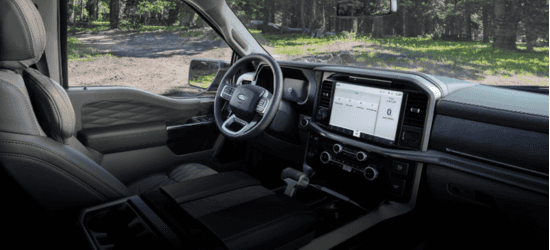
Cabin room is one of the more noticeable differences between these two trucks. The F-150’s SuperCrew configuration offers significantly more rear leg room than the Ranger, making it the better choice for families or crews who regularly ride with passengers in the back seat. The Ranger’s cabin is still comfortable for four adults on shorter trips, but the F-150 has a clear advantage for anyone who needs to stretch out on longer drives.
Beyond specs, the right choice often comes down to how you actually use a truck day to day. If you tow often, need maximum payload, or want the biggest cabin available, the F-150 is built for that. If you want a capable truck that’s easier to fuel, park, and maintain for daily driving with occasional towing, the Ranger is a better option.
Our team can walk you through financing and lease options for either model, so you can compare monthly payments before deciding. Learn more about financing at Vern Eide Ford.
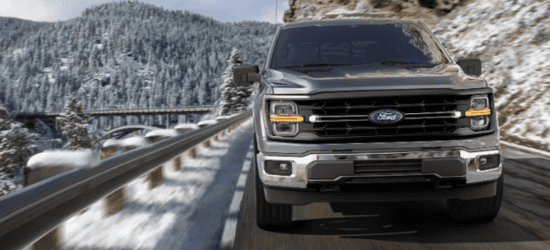
Stop by the Vern Eide Ford dealership in Mitchell, SD, and see for yourself how the F-150 and Ranger compare in person. Check out our special offers, browse our inventory of new F-150 trucks and new Ranger trucks, and filter by the features you want. Then give us a call, fill out the contact form, or stop in and talk with one of our truck experts. We’ll help you find the truck that fits your needs!
The F-150 offers significantly more towing capacity, with a max rating up to 13,500 lbs compared to the Ranger’s 7,500 lbs. If you regularly tow heavy trailers, boats, or campers, the F-150 is the stronger choice.
The Ranger generally gets better fuel economy than the F-150, since its standard 2.3L EcoBoost engine is smaller and the truck itself is lighter. The Ranger’s RWD models return around 21/26/23 MPG city/highway/combined, compared to roughly 18/23/20 MPG for the F-150’s standard EcoBoost V6.
The Ranger is a midsize pickup, while the F-150 is a full-size half-ton truck. That size difference is the main reason the F-150 offers more towing capacity, more interior room, and a larger fuel tank.
Yes, the F-150 offers an available 5.0L V8, along with EcoBoost V6 and hybrid options. The Ranger does not offer a V8, its most powerful available engine is a 3.0L V6 in the Raptor trim.
The F-150, especially in SuperCrew configuration, offers noticeably more rear leg room than the Ranger, making it a better fit for families or anyone who regularly carries rear-seat passengers.
The F-150 currently holds a 5-star overall NHTSA safety rating, while the Ranger holds a 4-star overall rating.